Article overview
- A low-traffic Shopify store can improve a broken buying journey without claiming that a small sample proves a conversion lift.
- This guide is about making a defensible release decision. It does not prescribe a universal sample size or an experiment duration. Those depend on the question, baseline behaviour, expected effect and the design of the analysis.
- A size selector that cannot be operated on a phone is a functional problem. Reproduce it, define the expected state and test the repair on the affected templates. The repair does not need a sales uplift claim to be a sensible correction.
- A new product explanation is different. You may have a well-supported reason to believe it reduces confusion, but its commercial effect still requires observation.
Putting this workflow into practice? Explore Shopify CRO Consulting for implementation scope, controls, and next steps.
A low-traffic Shopify store can improve a broken buying journey without claiming that a small sample proves a conversion lift. Separate directly testable defects from hypotheses about buyer behaviour, and choose a measurement method that matches the available traffic and business conditions.
This guide is about making a defensible release decision. It does not prescribe a universal sample size or an experiment duration. Those depend on the question, baseline behaviour, expected effect and the design of the analysis.
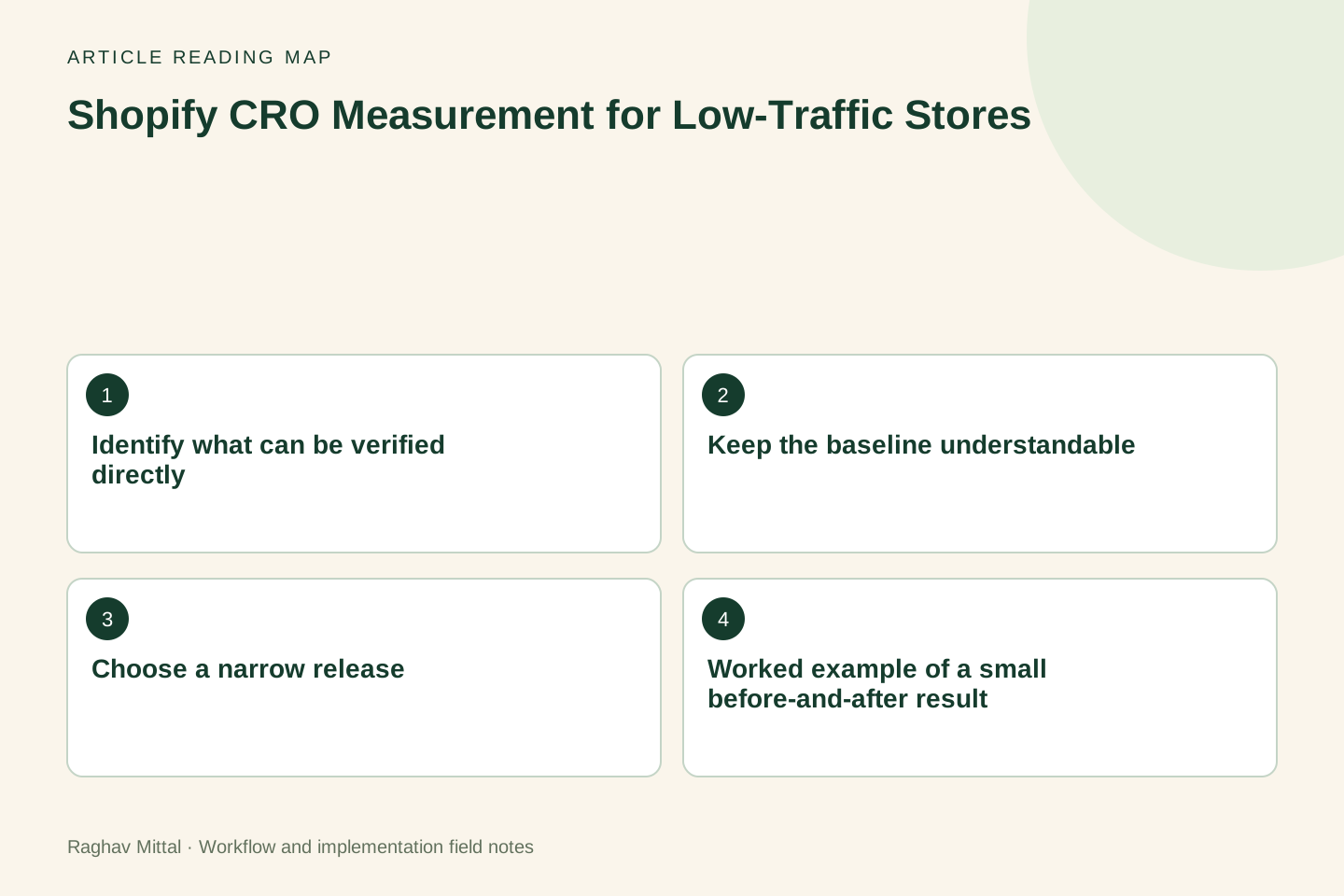
Identify what can be verified directly
A size selector that cannot be operated on a phone is a functional problem. Reproduce it, define the expected state and test the repair on the affected templates. The repair does not need a sales uplift claim to be a sensible correction.
A new product explanation is different. You may have a well-supported reason to believe it reduces confusion, but its commercial effect still requires observation. Record the evidence behind that hypothesis, such as a repeated support question and a buying task that leaves the answer unclear.
Keep the baseline understandable
Record the relevant products, acquisition sources, markets and devices. Confirm how sessions and purchases are measured. Shopify's analytics guidance is a starting point for understanding the available reports, but the team must agree which figures answer the actual question.
Avoid comparing a promotion week with an ordinary week as if the page were the only difference. Stock availability, pricing, campaigns and delivery changes can all affect the observed journey. Keep a change log alongside the measurements.
Choose a narrow release
Write one main hypothesis and identify the affected audience. “Clarify the delivery condition for this product's eligible destinations” is easier to investigate than changing the theme, offer, media and cart simultaneously.
Use guardrails that matter to the operation. A higher add-to-cart rate is not sufficient if customers then encounter a misleading stock promise or support receives more complaints. Agree what would make the team stop, revise or retain the change.
Worked example of a small before-and-after result
Illustrative figures: one observation period has 200 relevant sessions and four purchases; the next has 220 sessions and six purchases. The apparent rates differ, but ten total purchases do not establish that the page edit caused the movement.
| Evidence | What it can support | What remains uncertain |
|---|---|---|
| Repeated buying task now succeeds | The tested interface problem was repaired | Effect across untested devices |
| Support sees fewer delivery questions | A useful operational observation | Whether traffic composition changed |
| Purchases changed between periods | A descriptive result for those periods | Causal effect of the page edit |
Keep these observations together. Do not discard the useful functional evidence because the commercial sample is small, and do not turn a descriptive change into a guaranteed uplift forecast.
Decide whether an experiment is practical
If a controlled experiment is proposed, ask how the required exposure and decision rule were chosen. Agree when the team will look at the result and how uncertainty will be presented. Repeatedly checking until a favourable number appears weakens the interpretation.
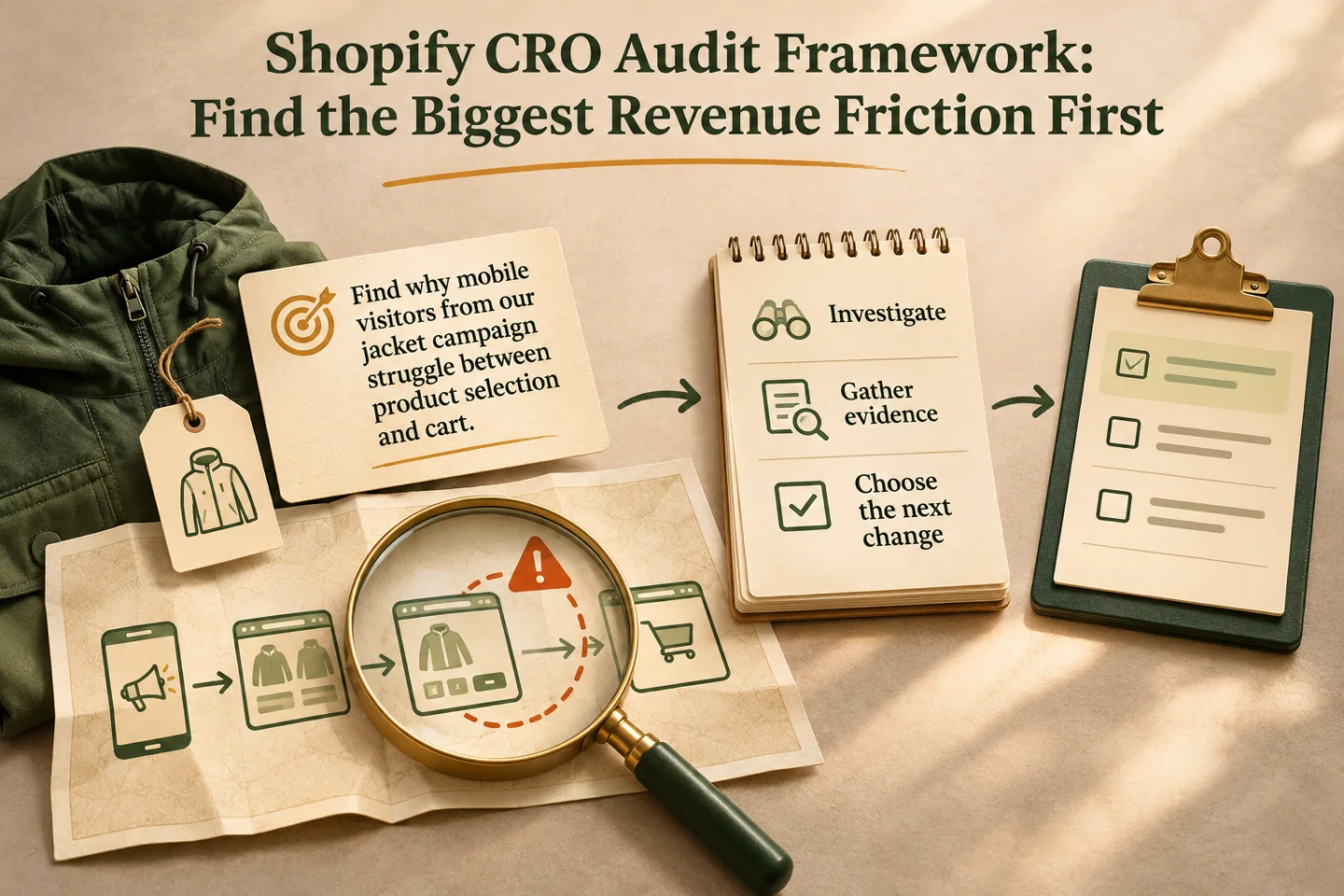
For a store where an experiment is not practical, document the release and review comparable periods with the relevant qualifications. The CRO audit framework explains how evidence becomes an implementation backlog without inventing precision.
Build a useful monthly review
Review confirmed repairs, unresolved hypotheses and changes in the operating context. Keep the small number of important decisions visible: what shipped, what evidence was observed and what the team will do next. Avoid a dashboard that encourages people to interpret every daily fluctuation as a new finding.
Start with the mobile product-page task and one clearly defined problem. For Shopify CRO consulting, share the store, traffic context and buying question. The scope should fit the evidence the business can realistically collect.
Frequently asked questions
Does low traffic mean a store should avoid all CRO work?
No. Functional defects and clear information gaps can still be investigated and repaired. Low traffic changes how confidently commercial outcomes can be measured and attributed, so the report should distinguish verification from a causal claim.
Can a before-and-after comparison prove the edit increased sales?
It describes the observed periods, but other changes may explain part or all of the difference. Record campaign, stock and measurement changes, compare relevant audiences and state the limits instead of presenting the comparison as a controlled experiment.

Founder, The Night Marketer (Shopify Select Partner). The agency has served 450+ brands since 2015.
Shopify CRO Consulting
I lead Shopify CRO engagements for D2C brands worldwide, with The Night Marketer (a Shopify Select Partner) handling design, development and testing. Every engagement starts with evidence: Shopify analytics, GA4, session recordings, device and traffic-source splits, and a walk through your real buying journey. The output is a prioritised backlog ranked by expected revenue impact and effort, then the fixes shipped and measured.