Key takeaways
- Hire for diagnosis when the cause is unclear and for development when the brief is testable.
- Connect each build task to evidence, acceptance criteria and a measurement plan.
- Compare specialists by relevant deliverables rather than job titles alone.
- Keep responsibility for the commercial question visible through launch.
Putting this workflow into practice? Explore Shopify CRO Consulting for implementation scope, controls, and next steps.
A Shopify consultant diagnoses why revenue, retention, or fulfilment is stuck. A developer builds the approved fix. Hire the wrong one first and you get polished features that don't move the number.
The two roles, plainly
A Shopify consultant starts with the business. They look at analytics, session recordings, checkout data, the offer, the post-purchase flow, and the operations behind the store. The output is a diagnosis and a prioritised plan: here's what's actually costing you money, here's the order to fix it, here's how we'll know it worked.
A Shopify developer takes an approved spec and builds it well: theme work, a custom section, an app integration, a Plus migration, a checkout extension. The output is working, maintainable code.
Both are necessary. They are not the same skill, and the order matters.
What goes wrong when you hire in the wrong order
A common risk: a founder feels conversion is weak, so they hire a developer to "redesign the store." The developer may do good work and improve the design while conversion remains unchanged — because nobody measured where the friction was before rebuilding, and the redesign carried the original problem forward in a nicer wrapper.
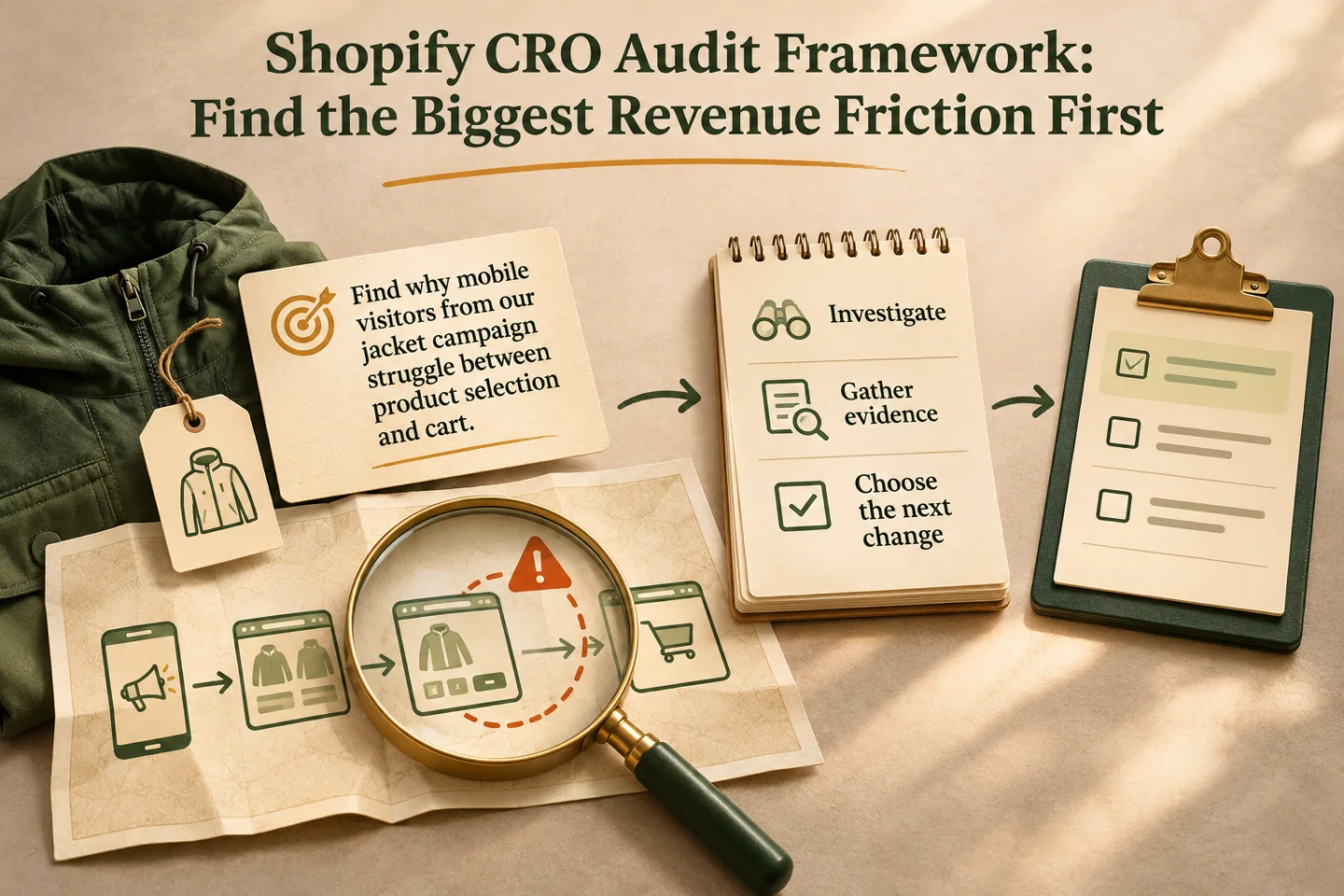
Consider an illustrative store where visitors add products to cart but abandon when delivery information becomes clear. A visual redesign alone would not establish the cause. The useful sequence is to segment the journey, inspect the delivery promise and test a focused change. This is a diagnostic example, not a client result.
In that scenario, the founder has spent the redesign budget and still needs the diagnosis.
The reverse mistake is rarer but real: hiring a strategist for a job that's purely execution — you already know exactly what to build, you just need it built.
- Diagnose the buying problem
- Define the required decision
- Choose strategy or implementation
- Agree acceptance and measurement
A visual map of this article’s approach. The detailed requirements and exceptions are explained in the surrounding sections.
How to tell which you need
You need a consultant if:
- You can feel something's wrong but can't name it precisely
- "Conversion is low" / "retention is bad" / "ops is chaos" with no specific cause
- You're about to spend significantly (redesign, replatform, scaling ads) and want to be sure you're spending on the right thing
- Multiple vendors are involved and nobody owns the commercial outcome
You need a developer if:
- You have a specific, well-defined build
- A consultant (or your own analysis) has already produced the spec
- It's maintenance, a fix, or a feature with clear requirements
You need both, in sequence if:
- The problem is real but undiagnosed, and the fix will require build work — which is most meaningful projects
The decision matrix
| Situation | Start with |
|---|---|
| "Sales are flat and I don't know why" | Consultant |
| "Our checkout completion is 40% and I want it higher" | Consultant (find the drop-off), then developer |
| "Build me a custom bundle section to this spec" | Developer |
| "We're migrating to Plus next quarter" | Consultant (scope it so you don't rebuild old debt), then developer |
| "The theme is slow" | Consultant or a performance-focused developer (diagnose first) |
| "Add this app and configure it" | Developer |
Keep one commercial owner involved through the build. Each task should link the observed problem, the proposed change and the measure used to assess it. The developer needs acceptance criteria; the consultant needs to inspect the implementation before interpreting results.
What a good consulting engagement produces
- A diagnosis backed by data (analytics, recordings, checkout funnel), not opinion
- A prioritised backlog scored by impact, confidence, and effort
- A clear spec for whatever needs building
- A way to measure whether each change worked
If a "consultant" gives you a list of best practices with no evidence from your store, that's a template, not a diagnosis.
Use the funnel to write a better brief
Shopify's behaviour reports include a conversion breakdown from sessions through cart additions, checkout and purchase. Use those stages as a starting point for the question you want answered. Keep the comparison period and audience consistent when investigating a change.
A low overall rate does not identify a build requirement. Ask where the change appears, whether traffic quality shifted and whether the measurement itself is trustworthy. A mobile product-page issue calls for different evidence than a payment error. The consultant should explain that distinction, and a developer should be able to challenge a brief that does not define expected behaviour.
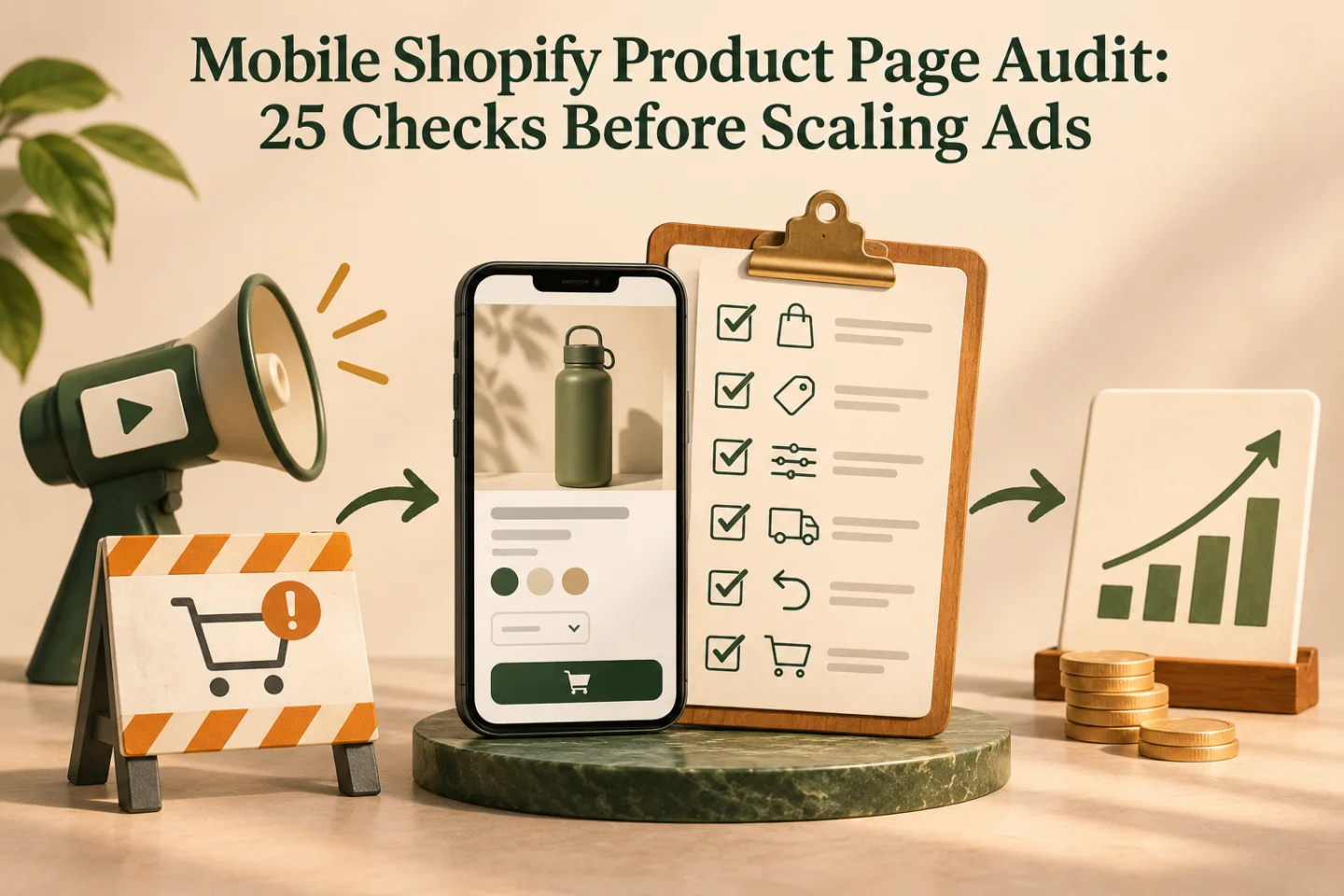
Read the mobile product-page audit for a more focused inspection checklist. Do not ask one redesign project to solve acquisition, merchandising, checkout and retention without defining which problem is first.
Compare proposals by deliverables
Ask each candidate to describe what you receive after diagnosis, what requires implementation and what is excluded. A useful proposal distinguishes observations, hypotheses and committed work. It should also name the person responsible for answering questions after launch.
Shopify's guide to hiring Partners recommends preparing requirements, budget, timeline and expected outcomes. Add a sample acceptance criterion to that brief. For example, a new product section should specify its mobile behaviour, empty states, merchant editing controls and how success will be measured.
For technical work, ask about theme compatibility, app dependencies, test coverage appropriate to the change and release recovery. For consulting, ask what data is needed, how conflicting evidence is handled and what would cause a recommendation to change. Avoid treating a confident forecast as an agreed commercial result.
Use the brief to separate diagnosis and prioritisation from implementation. Agree who owns measurement and maintenance after the work.
Keep the launch measurable
Before release, record the baseline period, tracking events and known promotions or traffic changes. Check the implementation in a staging or preview environment, including the affected mobile journey. Agree who can approve release and what signals would justify reverting it.
After launch, distinguish defects from an unproven hypothesis. A broken add-to-cart interaction needs correction; a change that works technically but has insufficient evidence of impact needs a measurement decision. Keeping those conversations separate helps the founder understand whether the next task is engineering, research or waiting for a useful observation window.
Next step
Before you hire either, write down the specific number you want to move and what you think is stopping it. If you can do that with evidence, you may just need a developer. If you can't, that gap is exactly what a consultant is for.
For a scoped build, explore Shopify and conversion websites. For diagnosis, see Shopify CRO consulting, or send your store and current bottleneck.
Frequently asked questions
When should a Shopify project start with diagnosis?
Start with diagnosis when the business problem is real but its cause is unclear, such as traffic without enough purchases. The output should identify evidence, priorities and testable implementation requirements.
When can a Shopify developer start directly?
A developer can start from a specific, well-defined fix or feature with reproduction steps and acceptance criteria. Agree who will verify the released work and assess its outcome.
Related implementation guides

Founder, The Night Marketer (Shopify Select Partner). The agency has served 450+ brands since 2015.
Shopify CRO Consulting
I lead Shopify CRO engagements for D2C brands worldwide, with The Night Marketer (a Shopify Select Partner) handling design, development and testing. Every engagement starts with evidence: Shopify analytics, GA4, session recordings, device and traffic-source splits, and a walk through your real buying journey. The output is a prioritised backlog ranked by expected revenue impact and effort, then the fixes shipped and measured.