Article overview
- A cross-border return needs a clear customer journey and an operational record that survives the handoff between support, the warehouse and finance.
- Do not assume an international return is a domestic return with a different label. The available service, documentation, charges and product conditions may differ.
- Identify the order, fulfilled item, original destination and approved return conditions. Keep the customer's reason distinct from the team's assessment.
- Shopify's returns and exchanges guidance describes the platform workflow and relevant considerations. Review the actual store, payment and fulfilment setup before promising that an exchange or refund will work the same way for every order.
Putting this workflow into practice? Explore Shopify Automation for D2C Operations for implementation scope, controls, and next steps.
A cross-border return needs a clear customer journey and an operational record that survives the handoff between support, the warehouse and finance. Explain how the customer starts the request, which instructions apply to that order and when the next decision will be made.
Do not assume an international return is a domestic return with a different label. The available service, documentation, charges and product conditions may differ. Confirm those details with the responsible teams rather than writing a universal policy into an automated message.
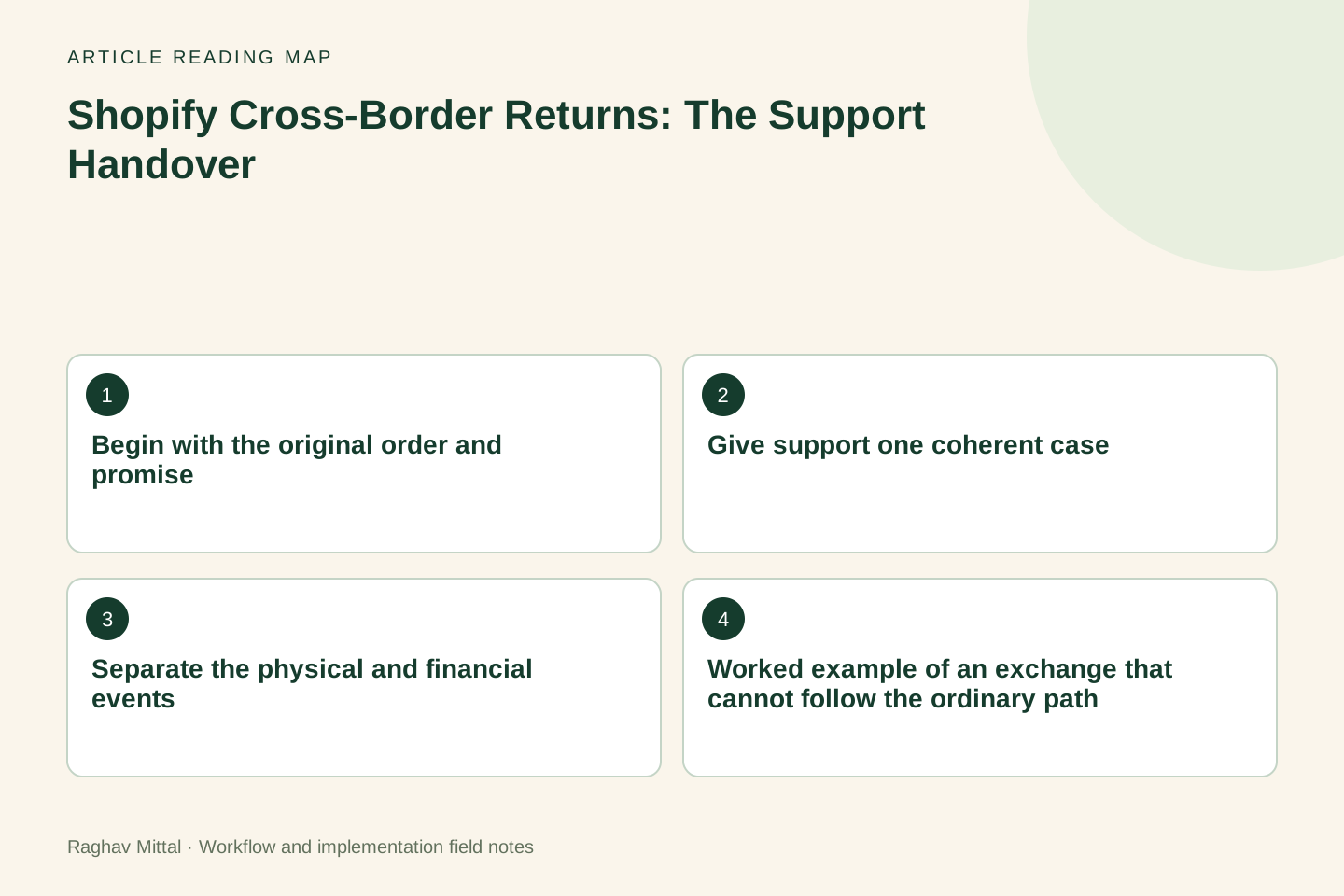
Begin with the original order and promise
Identify the order, fulfilled item, original destination and approved return conditions. Keep the customer's reason distinct from the team's assessment. A damage report, a sizing issue and a change of mind can require different evidence and decisions.
Shopify's returns and exchanges guidance describes the platform workflow and relevant considerations. Review the actual store, payment and fulfilment setup before promising that an exchange or refund will work the same way for every order.
Give support one coherent case
The case should connect the customer conversation, item, requested outcome and current owner. Preserve messages already sent so a second agent does not issue contradictory instructions. Use an explicit waiting reason when the next action belongs to the customer, carrier or receiving team.
Ask only for evidence needed to make the decision. A clear explanation of the requested photo or reference is more helpful than repeated generic requests. Restrict access to personal order information and avoid copying complete details into broad internal channels.
Separate the physical and financial events
A return request, an item arriving at a warehouse and an issued refund describe different facts. Keep their references and dates separate. A finance decision may depend on the approved policy and evidence; a tracking scan alone should not silently decide that every condition has been met.
Document what happens to inventory after inspection. An item can be received without being suitable for resale. Avoid increasing available stock solely because a support agent closed a conversation or a payment was reversed.
Worked example of an exchange that cannot follow the ordinary path
Illustrative scenario: a customer abroad requests a different jacket size. The original item has shipped, the preferred size is not available in that market and support cannot yet confirm the return route.
| Decision | Required evidence | Person responsible |
|---|---|---|
| Is the request within the approved conditions? | Order and policy version | Support |
| Can the replacement be supplied? | Market and stock availability | Operations |
| Which financial outcome is approved? | Agreed resolution and transaction evidence | Finance |
The useful response explains the next check and gives a realistic update point. It should not confirm an exchange before stock and process are settled. Keep the alternative outcome linked to the same case rather than creating a disconnected second conversation.
Align messages with confirmed events
Define what each customer message means. Acknowledging the request is different from approving it. Receiving a parcel is different from completing inspection. A refund notification should follow the verified financial action and use the correct reference.
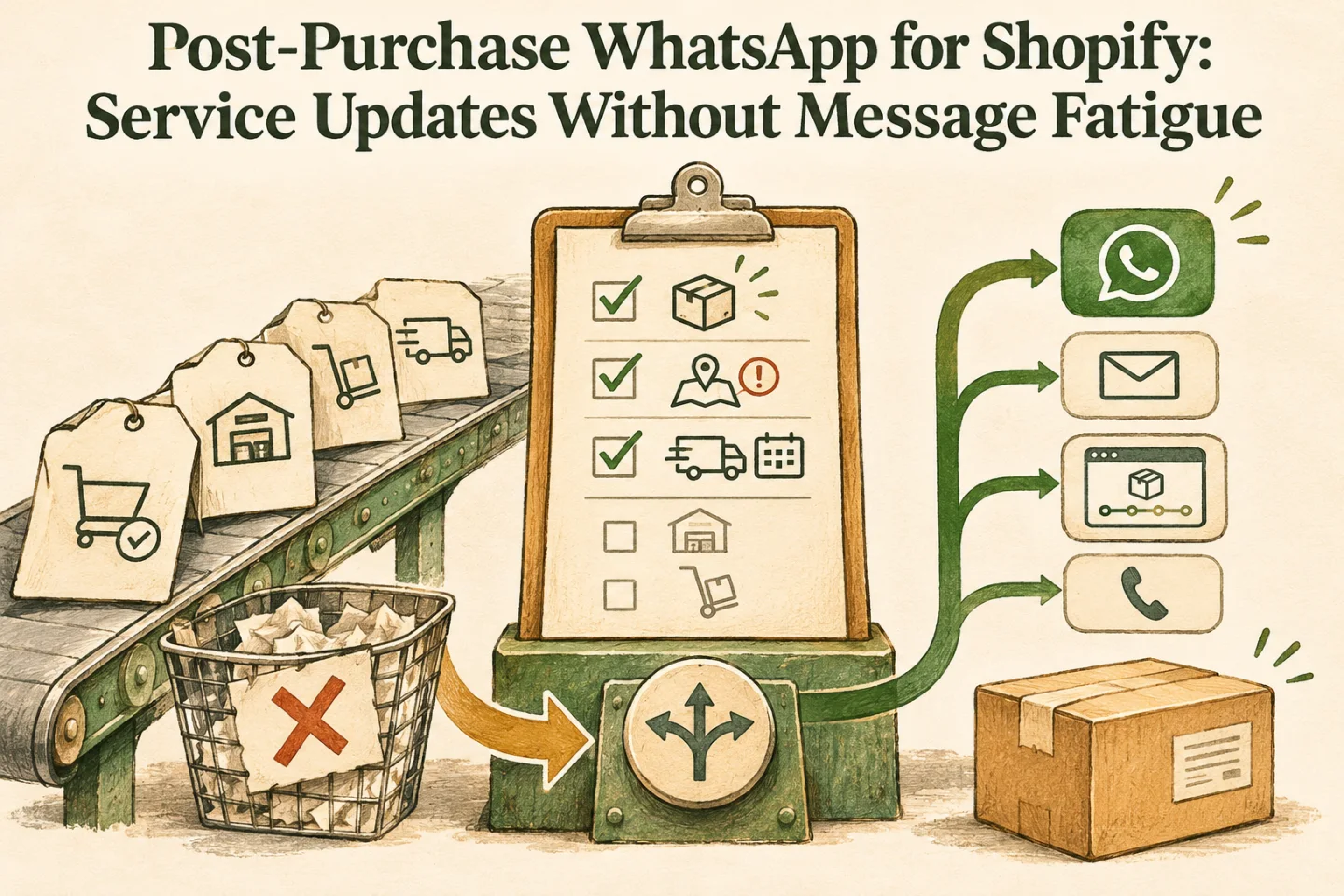
The post-purchase messaging guide helps connect service communications without unnecessary repetition. Respect the customer's permitted channel and avoid adding promotional content to a resolution message merely because an automation can send it.
Review the full case after launch
Measure time waiting at each handoff, repeated evidence requests and cases that reopen because the promised resolution did not occur. Compare the reason categories by relevant market without treating a small sample as a stable rate.
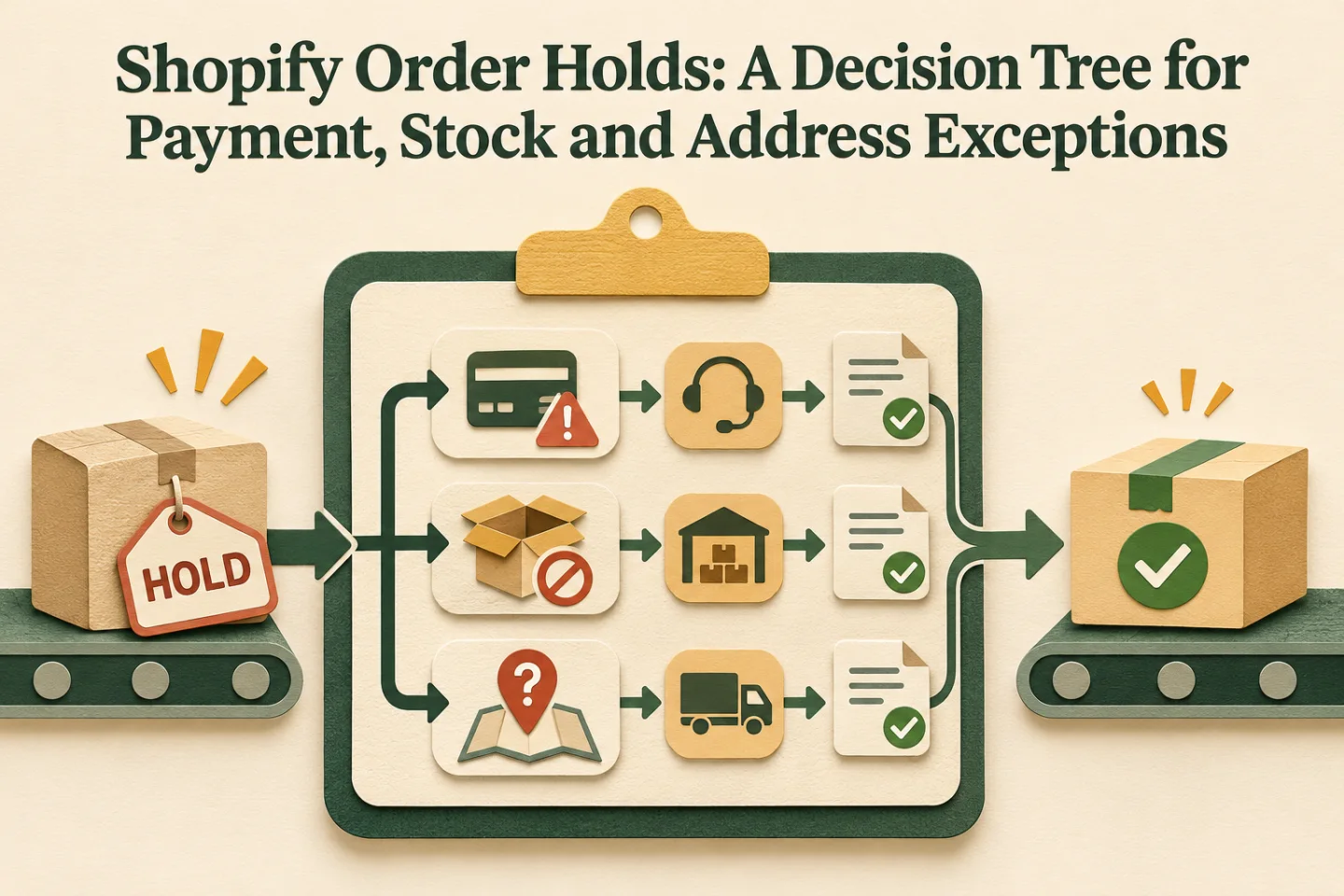
Use the order-hold decision guide for unresolved operational states. Explore Shopify automation, or share one redacted return journey to scope the support, stock and finance handoffs.
Frequently asked questions
Should a refund automatically mark an international item as restocked?
No. Record the physical return, inspection and approved inventory treatment separately from the payment outcome. The workflow should explain where the item is and whether it may be sold again.
Can support promise a replacement before checking market availability?
It should confirm the required stock, destination and process before committing. An acknowledgement can explain the investigation and next update without presenting an unverified replacement as approved.

Founder, The Night Marketer (Shopify Select Partner). The agency has served 450+ brands since 2015.
Shopify Automation for D2C Operations
I design Shopify automation for D2C teams that need cleaner order operations, customer workflows, inventory alerts, fulfilment handoffs, retention signals, and reporting. The work can use Shopify Flow, approved apps, APIs, webhooks, spreadsheets, CRM, helpdesk, warehouse, or custom integrations based on the stack you already run.