Lead Qualification Automation: Separate Curious Traffic From Real Buying Intent
If you are searching for lead qualification automation, you are probably not looking for another shiny tool list. You are trying to remove a repeated delay, a manual handoff, or a follow-up gap that keeps showing up inside the business.
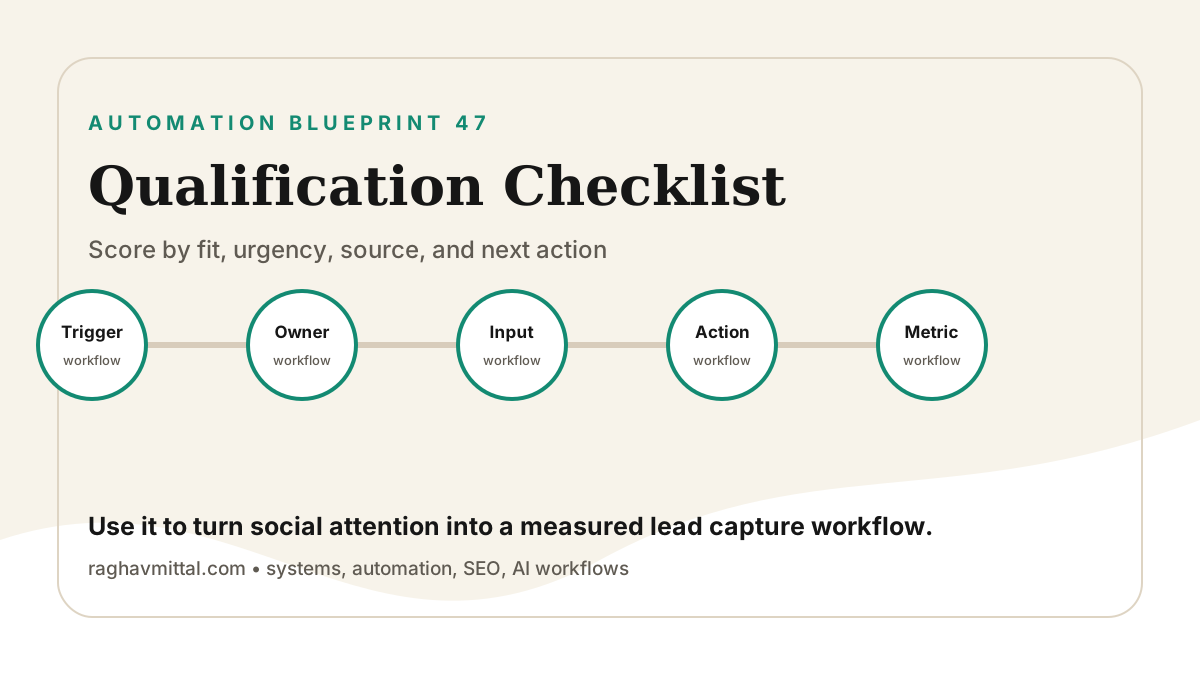
Score by fit, urgency, source, and next action. That is the useful lens. Automation works best when it makes a real next action faster, clearer, and easier to measure.
The real search intent behind this topic
This topic usually attracts teams qualifying inbound leads. The mistake is treating everyone as if they only need definitions. Most readers need a decision path: what to automate, what to keep human, and how to know if the workflow is working.
A practical workflow you can use
- Map the trigger. Define the exact moment the workflow should begin: form submit, deal stage change, order issue, missed SLA, uploaded file, or customer reply.
- Choose the owner. Every automation still needs a human accountable for exceptions, quality, and business judgment.
- Standardize the input. Bad automation usually starts with vague fields, inconsistent naming, or missing context.
- Automate the next action. Send the message, assign the task, update the CRM, create the document, or push the alert.
- Measure the lag. Track how much time passes between trigger and action. That is where the ROI becomes visible.
Where teams usually get stuck
The common failure is automating the visible task while ignoring the messy decision before it. A reminder helps, but it will not fix unclear ownership. A chatbot helps, but it will not fix weak qualification. A spreadsheet script helps, but it will not fix bad source data.
- Do not automate a process nobody owns.
- Do not let AI send high-risk promises without review.
- Do not skip logs, fallbacks, and failure notifications.
- Do not measure only volume; measure speed, accuracy, and conversion quality.
What good looks like
A good automation system feels calm. The right person sees the right context, the customer gets a timely response, and the business can see whether the workflow improved. It should reduce chasing, not create a new dashboard everyone has to babysit.
Next step
Use this as a quick audit: pick one workflow, write the trigger, owner, input, next action, and success metric. If any of those five are unclear, fix that before buying another tool.
Want the Qualification Checklist? Comment or DM the campaign keyword on social, or use the website checklist flow to capture it and turn the interest into a qualified lead.
CRM & Revenue Operations Systems
I build CRM workflows that make lead source, owner, stage, next action, and revenue visibility impossible to miss.