AI Workflow Governance: How to Use AI Without Creating Operational Risk
Add approval points, data rules, and quality checks in a practical, founder-friendly automation playbook.
Read field notePractical essays from the work: CRM builds, operating systems, marketing architecture, and how to move from chaos to shipped outcomes.
Add approval points, data rules, and quality checks in a practical, founder-friendly automation playbook.
Read field note
Use hours, error cost, delay, and opportunity value in a practical, founder-friendly automation playbook.
Read field note
Fix the process before encoding it in a practical, founder-friendly automation playbook.
Read field note
Look for diagnosis, documentation, and measurable handoffs in a practical, founder-friendly automation playbook.
Read field note
Small-business automation should start with one painful repeat loop that has a clear trigger, owner, input, output, and measurable delay.
Read field note
A business systems audit maps tools, owners, data handoffs, response delays, exceptions, and metrics to find hidden operational drag.
Read field note
An operations automation roadmap should move from capture to routing, reporting, exception handling, and continuous improvement.
Read field note
A delegation system defines decision rights, quality bars, escalation rules, weekly reporting, and owner visibility.
Read field note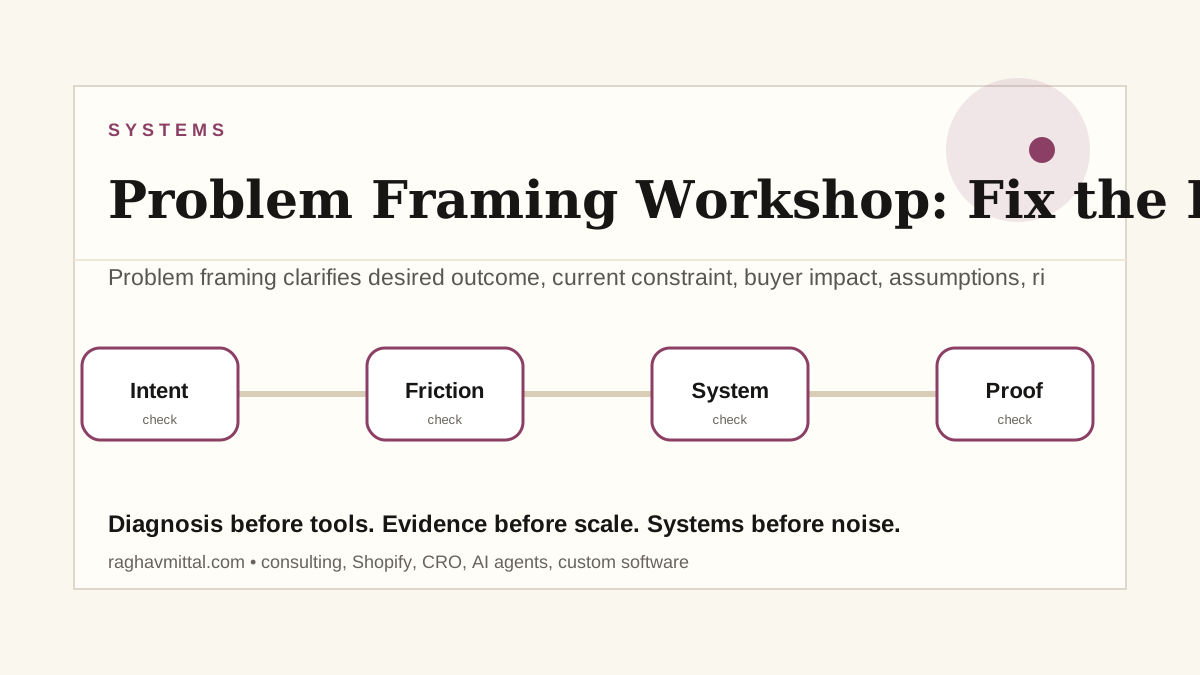
Problem framing clarifies desired outcome, current constraint, buyer impact, assumptions, risks, and the smallest useful next step.
Read field note